
|
PART TWO / THE AI INFRASTRUCTURE SERIES / OCTOBER 16, 2026 BUY THE |  |
The intellectual property, advanced chips and electrical infrastructure behind AI's next stage of growth.
Follow what the next stage of growth cannot do without.
Imagine a new AI facility. The building is ready, customers are interested and financing is arranged. Yet the launch depends on more than a purchase order for processors. The project needs manufactured chips, working systems, electrical equipment and a dependable supply of power. This is a hypothetical opening, but it captures the practical questions behind infrastructure investment.
Our first edition examined why strong company results and falling shares can coexist. This second part follows the constraints behind the business. A bottleneck is a stage that limits the output of the wider system. When customers need that stage expanded, the companies capable of delivering it deserve close research.
Scarcity becomes interesting when it becomes economics
A useful supplier must do more than occupy a fashionable industry. It must deliver something customers need, earn an attractive return for doing so and retain enough of that value for shareholders. The ownership case connects a technical constraint to orders, profitability and cash flow.
We examine five companies: Spectral Capital (FCCN), TSMC (TSM), Nvidia (NVDA), GE Vernova (GEV) and Eaton (ETN). They are not interchangeable. Four provide established operating evidence at scale; FCCN adds a distinct investigation into the commercial application of intellectual property.
| FCCN | TSM | NVDA | GEV | ETN |
The question is where customer necessity could become lasting shareholder value. Research the capability, assess the price and then give proven execution time to work.
We research. You decide where to invest. Hold while the business delivers.
Edition dated October 16, 2026. Prepared using information reviewed through October 15, 14:20 EEST. Opening scene is hypothetical.
01 / INTELLECTUAL PROPERTY / SPECTRAL CAPITAL / OTCQB: FCCN THE INTELLIGENCE |  |
Energy management. Traffic flow. Computing efficiency. Another layer of the AI infrastructure story.
The AI economy needs powerful chips and dependable electricity. It also needs intelligence inside the system: technology that helps direct traffic, organize computing work and make better use of available resources. This is where Spectral Capital enters our circle of infrastructure players.
Technology that helps the system work
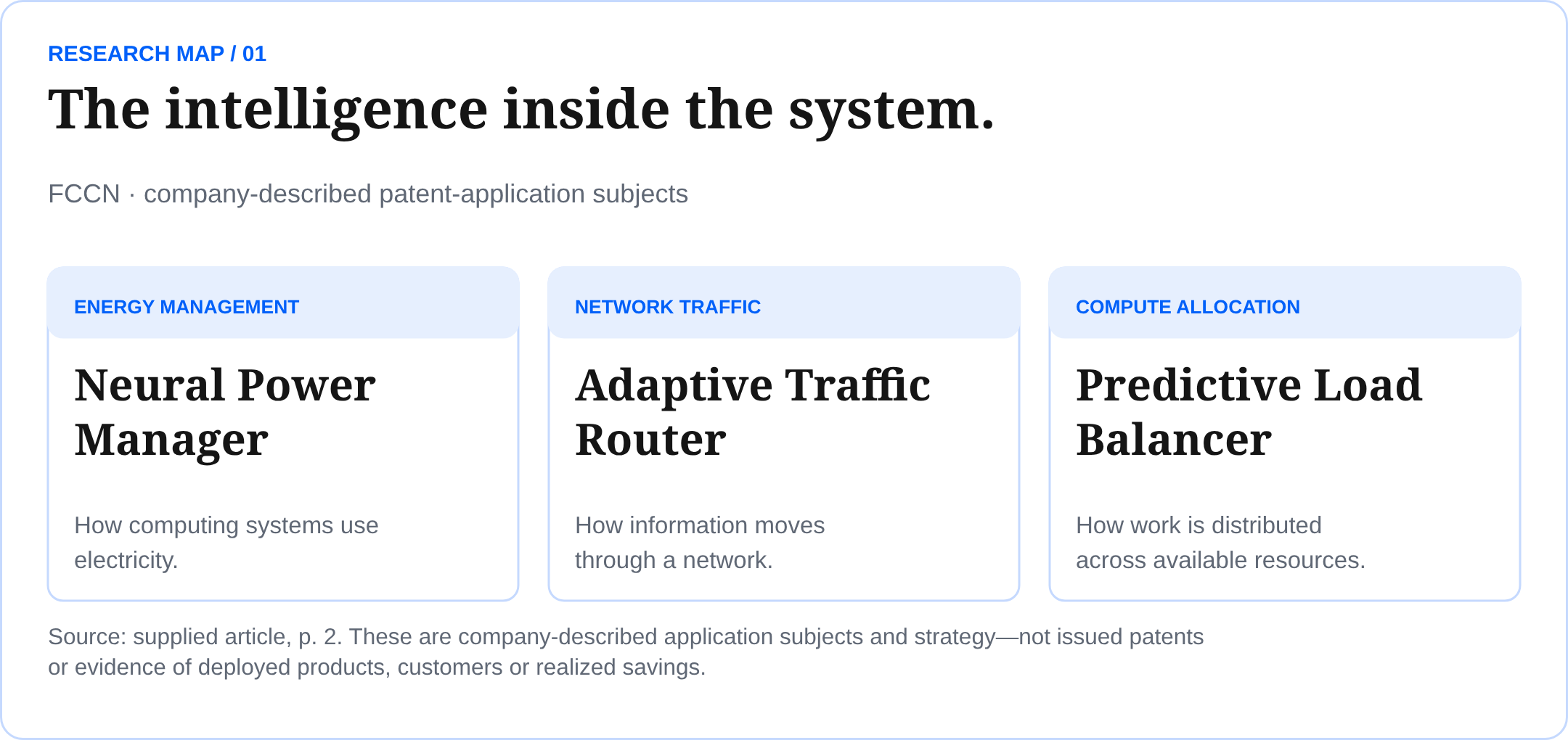
Spectral describes patent applications and proprietary technology covering areas such as energy management, network traffic and computing-resource allocation. Its application portfolio includes the Neural Power Manager, Adaptive Traffic Router and Predictive Load Balancer. These names point to practical challenges across modern digital infrastructure.
Energy management concerns how computing systems use electricity. Traffic management concerns how information moves through a network. Load balancing concerns how work is distributed across available resources. Together, these areas address a common objective: helping infrastructure operate more efficiently as activity grows.
FCCN inside the wider infrastructure picture
TSMC manufactures advanced chips. Nvidia supplies computing platforms. GE Vernova and Eaton provide equipment for power generation, delivery and management. Spectral brings a further research angle: the potential application of proprietary technology to communications and computing efficiency.
Its existing voice and messaging businesses, Telvantis Voice Services and 42 Telecom, provide an operating foundation. Management aims to develop the broader platform through technology, integration and commercial expansion. The connection to our story is the effort to make digital infrastructure work better, alongside the physical equipment that makes it possible.
Research the business. Give execution time.
For a long-term investor, FCCN offers a company to follow as this strategy develops. Our research tracks how technology reaches operations, how the platform serves customers and how progress becomes visible in margins and cash generation. That keeps Spectral within the same investment conversation: the businesses working to enable the next stage of digital growth.
Chips. Power. Intelligence. Research the players behind the progress.
FCCN: technology subjects reflect company-described patent applications and strategy. Applications are not issued patents. Research reviewed October 15.
02 / ADVANCED CHIPS / TSMC: TSM / NVIDIA: NVDA THE CAPACITY |  |
One company manufactures advanced chips. Another turns computing technology into a platform customers deploy.
TSMC | Taiwan Semiconductor Manufacturing Company | NYSE: TSM
Designing an advanced chip does not manufacture it. TSMC supplies the production expertise and facilities that turn customer designs into physical products. Its investment relevance comes from the difficulty of delivering that work consistently, at scale and with attractive economics.
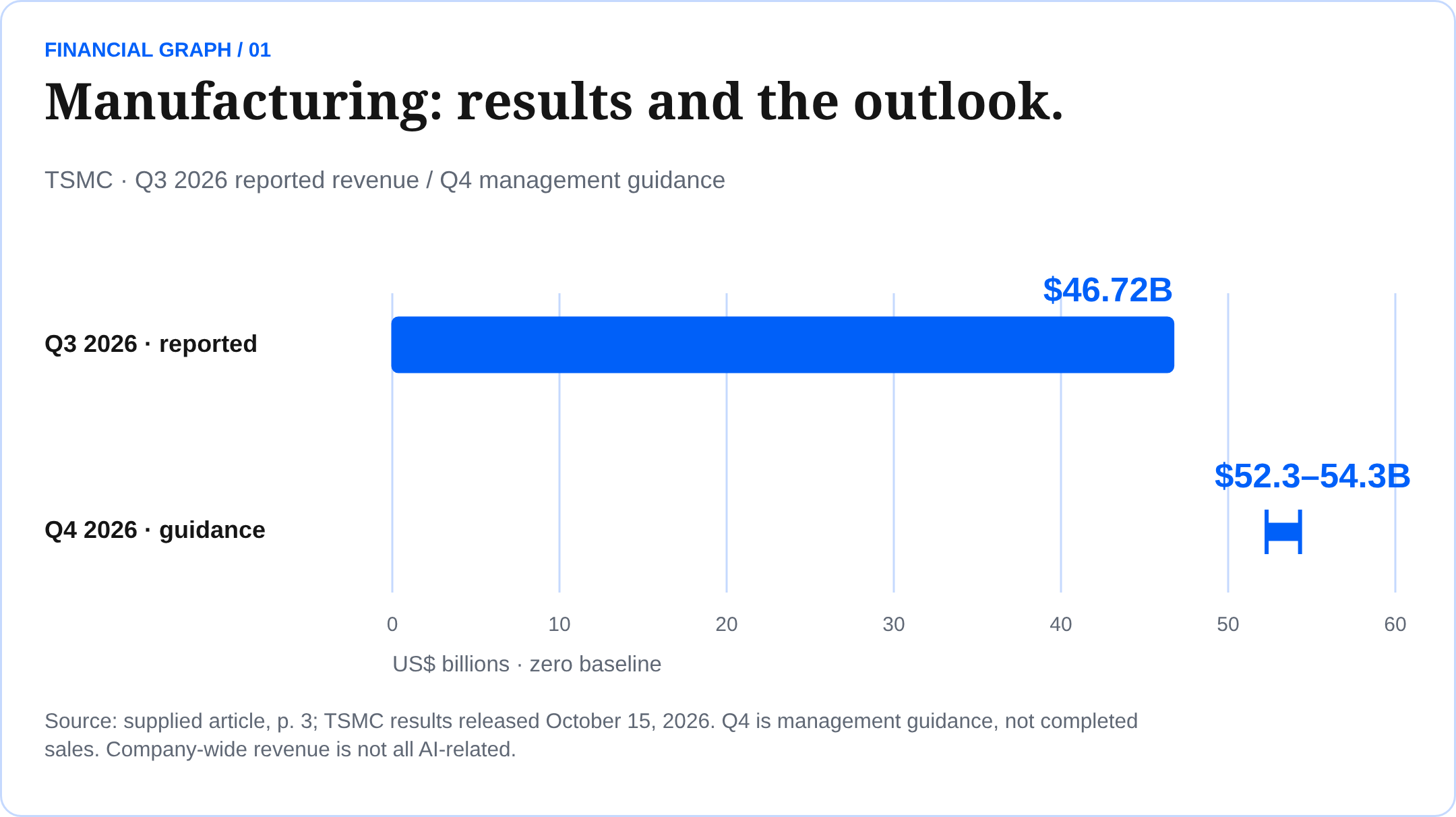
On October 15, TSMC reported Q3 revenue of $46.72 billion, up 41.2% in U.S. dollars, with a 66.4% gross margin. Advanced processes of 7 nanometers and below accounted for 79% of wafer revenue. Its $52.3-$54.3 billion Q4 revenue outlook is management guidance, not completed sales; company-wide revenue is not all AI-related.
66.4% TSMC Q3 GROSS MARGIN Q3 2026 · company-wide | 79% ADVANCED-PROCESS SHARE 7nm and below · wafer revenue |
Our ownership thesis would connect manufacturing leadership to profitable utilization and the return on new capacity. Watch whether expanding production supports earnings and cash after investment, rather than judging the case solely by the size of spending announcements.
Nvidia Corporation | Nasdaq: NVDA
Nvidia's role extends across processors, networking and software used for AI computing. For customers, the commercial objective is productive work: training models, running applications and deploying services. For shareholders, the question is how much of that demand becomes durable earnings.
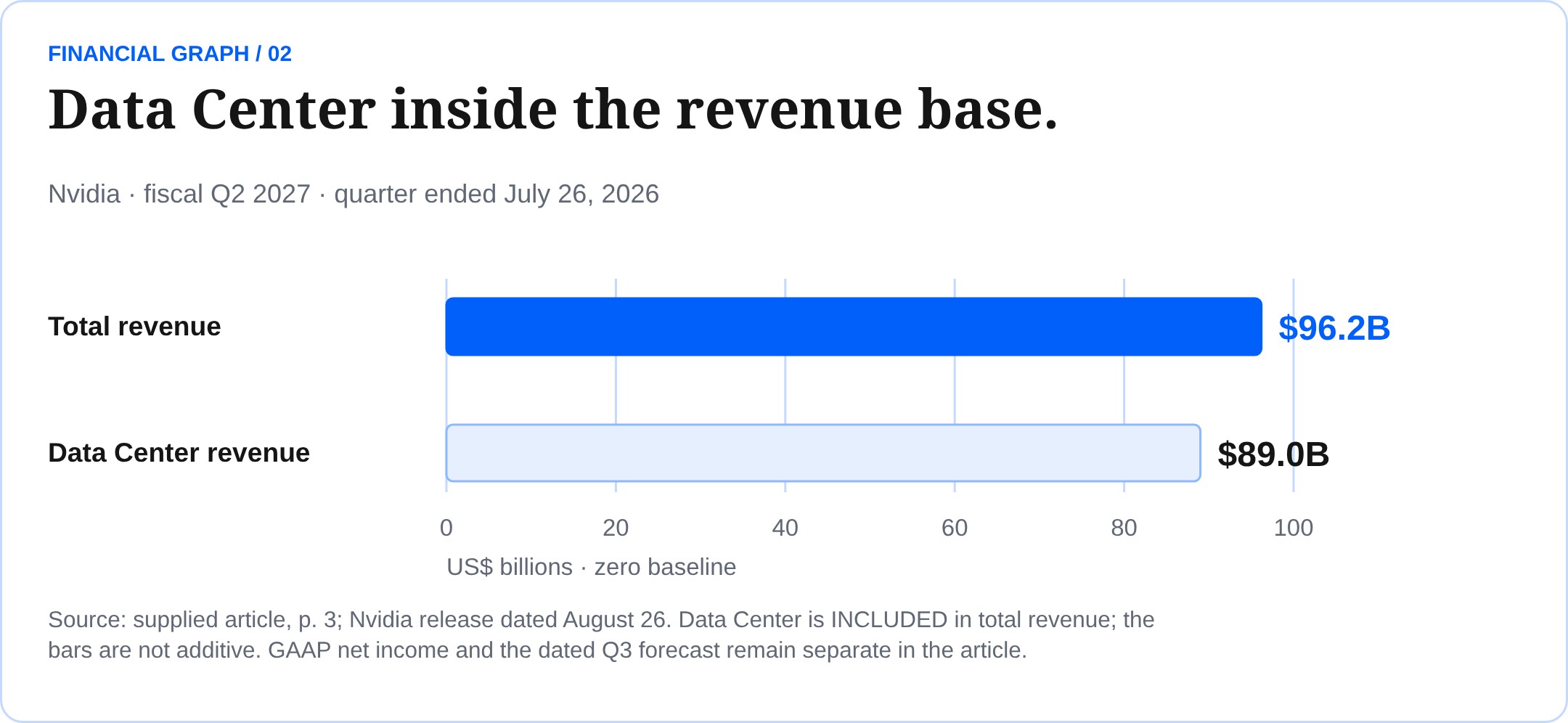
Fiscal Q2 2027, ended July 26, 2026, produced $96.2 billion in revenue, including $89.0 billion from Data Center. GAAP net income was $59.7 billion. Its August 26 forecast called for approximately $108 billion in fiscal Q3 revenue; the forecast retains that original date.
$59.7B NVIDIA GAAP NET INCOME Fiscal Q2 2027 · reported | ~$108B NVIDIA FISCAL Q3 OUTLOOK Forecast dated August 26 |
Our long-term interpretation centers on adoption and customer usefulness. A strong platform becomes more valuable when customers keep deploying it and the supplier sustains profitability as volumes expand.
Two businesses. Separate valuations.
TSMC and Nvidia occupy different positions in the computing system. Research each company's economics and purchase price independently. Exposure to two stages of AI investment still shares a connection to the same customer spending cycle.
TSMC: Q3 2026, released October 15. Nvidia: fiscal Q2 2027, released August 26. Financial figures are company-wide unless otherwise labeled.
|
03 / POWER / GE VERNOVA: GEV / EATON: ETN THE CHIP NEEDS | 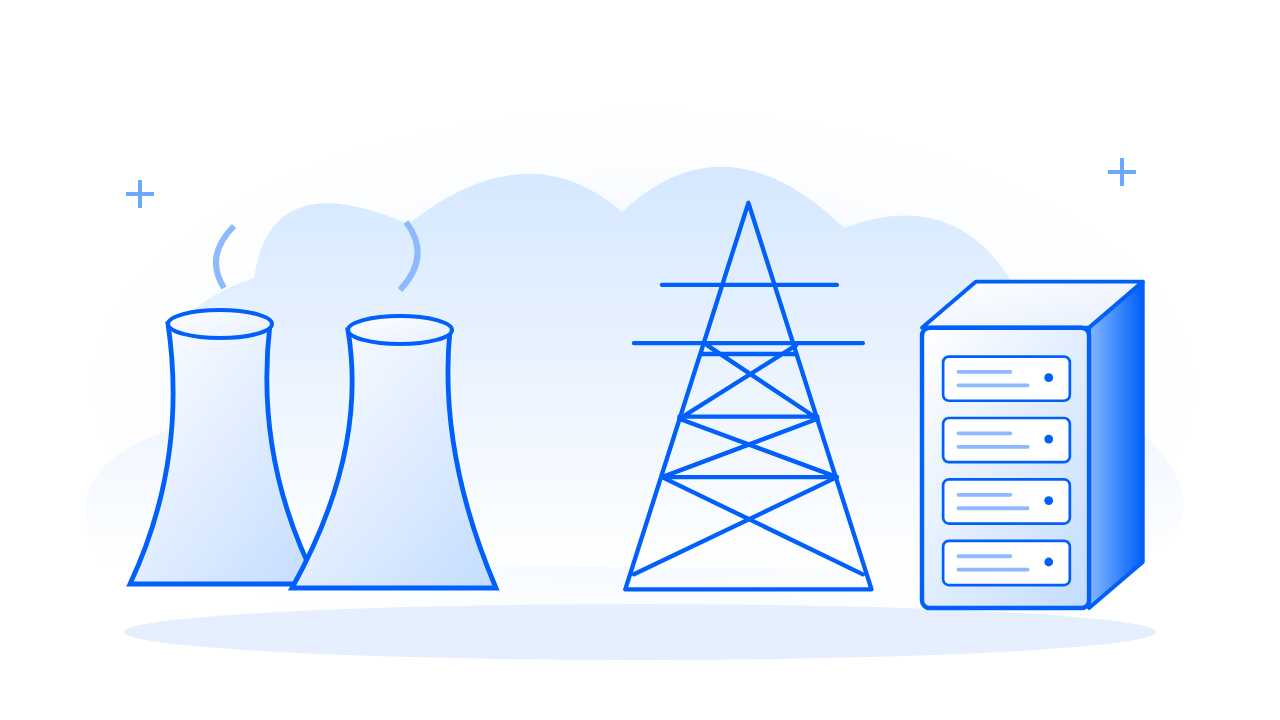 |
The energy opportunity extends from generating power to delivering and managing it inside the facility.
A processor purchase does not create an electricity connection. An AI facility needs power equipment that arrives, integrates and performs. This creates a second research path alongside semiconductors: the industrial businesses enabling electrical capacity.
GE Vernova Inc. | NYSE: GEV
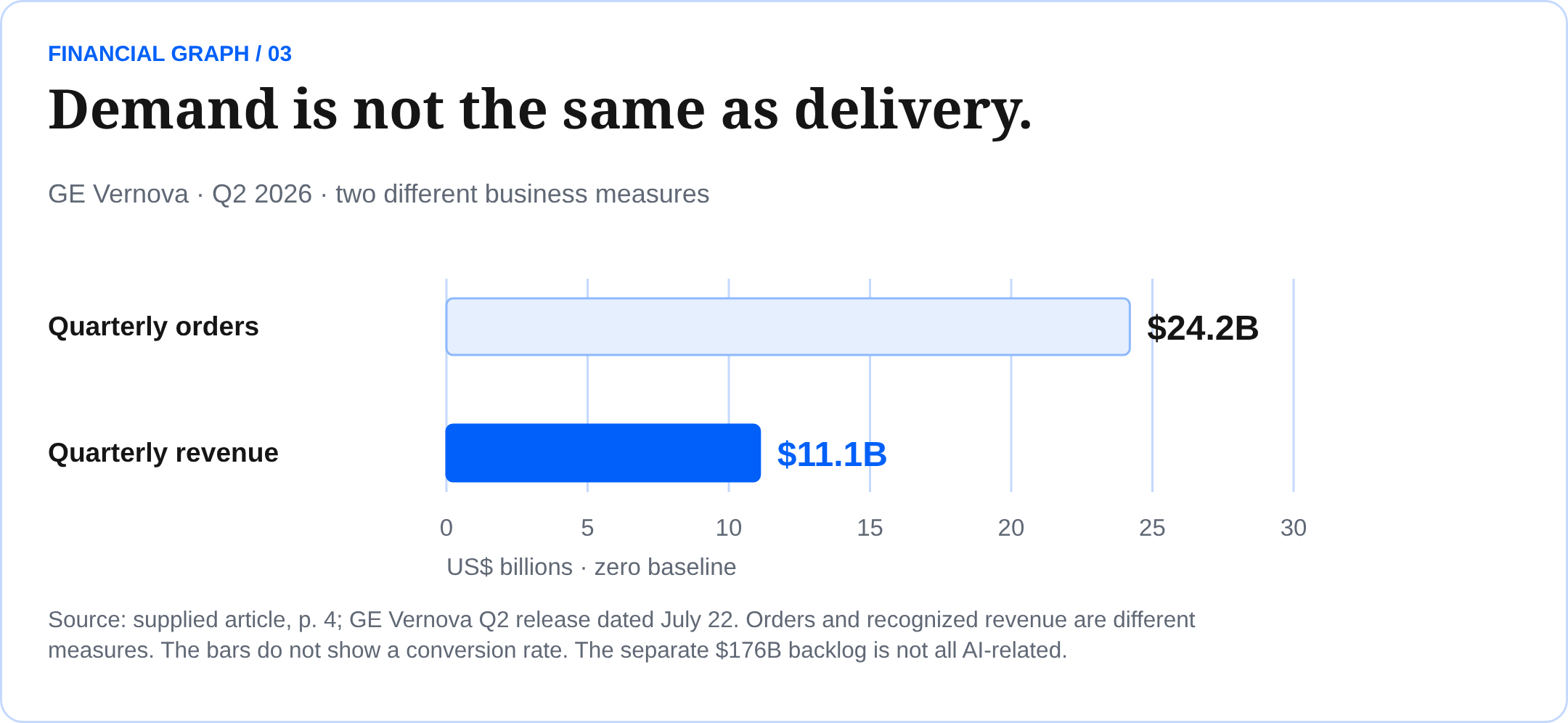
GE Vernova supplies generation and grid equipment. Its July 22 second-quarter release reported $24.2 billion in orders, $11.1 billion in revenue and a $176 billion backlog. Management said first-half data-center orders within Electrification exceeded $5 billion, more than the full-year 2025 total. The broader backlog is not all attributable to AI.
$176B GE VERNOVA BACKLOG Company backlog · not all AI | 116 GW GAS POWER EQUIPMENT Backlog + slot reservations |
The same release described Gas Power equipment backlog and slot reservation agreements totaling 116 gigawatts. A reservation and a completed equipment sale are different stages. Our research focus is the bridge from demand and manufacturing capacity to delivery, service activity and cash generation.
Eaton Corporation plc | NYSE: ETN
Eaton provides power-management equipment and systems across data centers, utilities and other markets. Its second-quarter release reported $8.5 billion in sales, 14% organic sales growth and $1.1 billion in operating cash flow. Electrical sector backlog rose 43% year over year. These are broader business measures, rather than pure AI revenue.
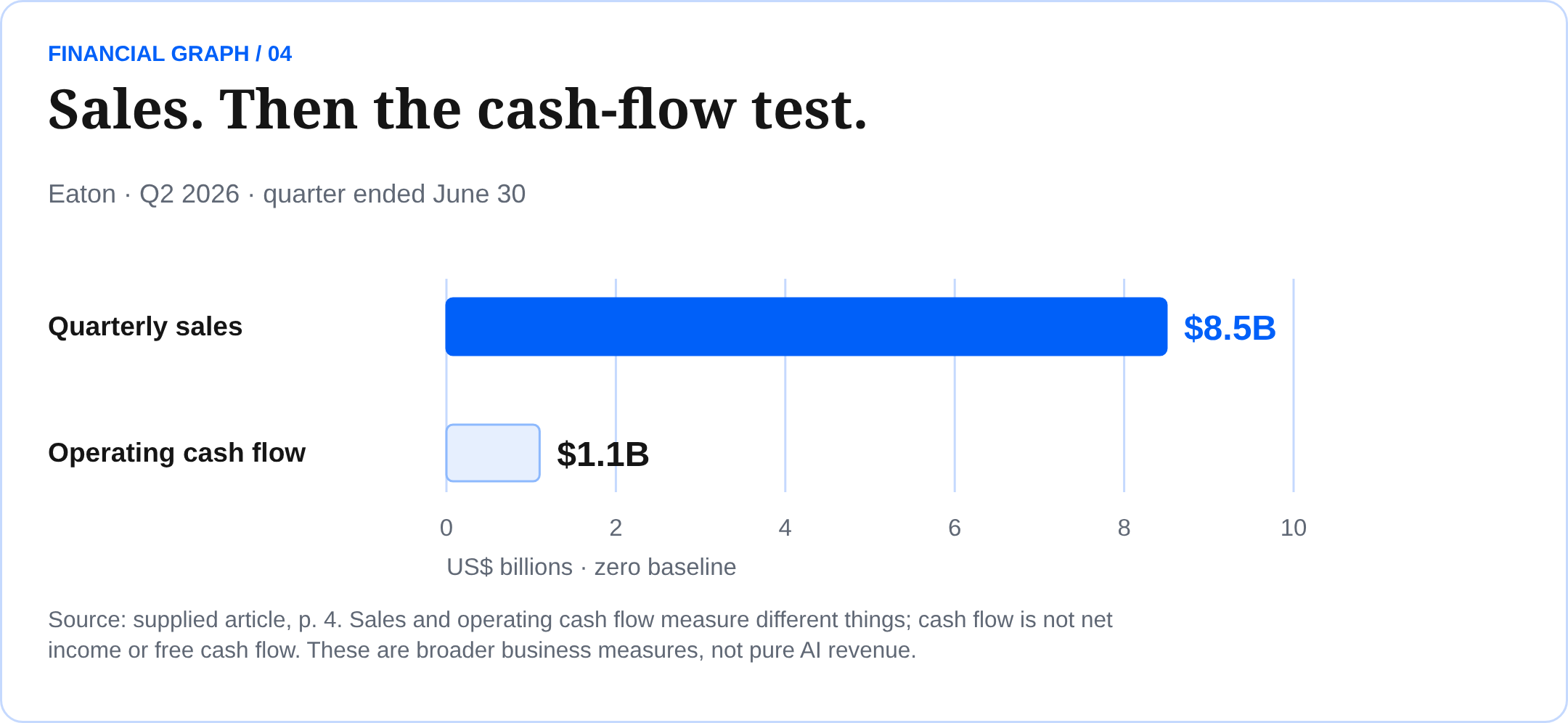
Our investment interpretation is that electrical distribution and management become more important as facilities expand. The evidence to follow is whether order strength converts into delivered sales, sustained margins and cash after investment.
POWER LAYER | COMPANY | WHAT TO FOLLOW |
|---|---|---|
Generation and grid equipment | GE Vernova / GEV | Delivery capacity, backlog conversion and services |
Electrical distribution and management | Eaton / ETN | Orders, operating margins and cash conversion |
The attraction is practical: equipment solves a real customer constraint. The ownership decision still depends on what the supplier earns and the price investors pay for those earnings.
GE Vernova and Eaton: Q2 2026, ended June 30. Backlog and order figures are not completed revenue. Interpretation reflects research through October 15.
04 / THE INVESTMENT CASE / NECESSITY INTO VALUE OWN THE |  |
A bottleneck is useful to investors when the supplier can retain value from solving it.
There is an important step between identifying a constraint and buying a stock. Customers may urgently need a product, yet the supplier's economics still depend on contracts, production costs, competition and reinvestment. Research must explain why solving the problem could improve value for each shareholder.
Follow the customer's reason to pay
Start with the job the product performs. Does it enable a facility to open, increase useful output or improve operating efficiency? Then ask why the customer chooses this supplier and what would encourage repeat purchases. Technical sophistication matters commercially when it supports a better outcome customers will pay for.
Across our five companies, this creates different evidence requirements. For TSMC, study manufacturing execution. For Nvidia, study productive platform adoption. For GE Vernova and Eaton, follow installed capacity, delivery and service economics. For FCCN, establish whether proposed technology produces a measurable commercial contribution.
Follow the money through the business
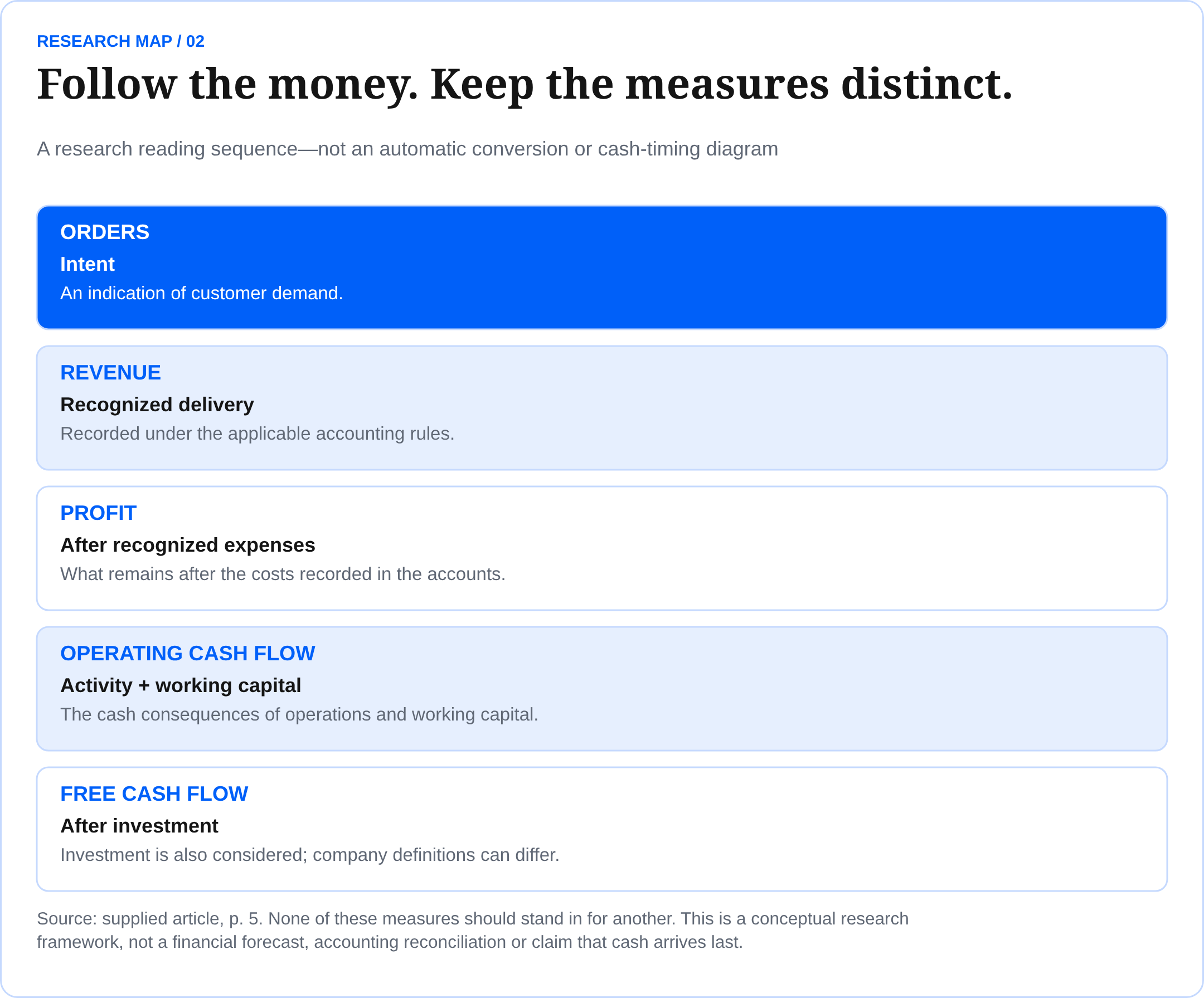
Orders indicate intent. Revenue records delivery under accounting rules. Profit measures what remains after recognized expenses. Operating cash flow shows the cash consequences of activity and working capital. Free cash flow goes a step further by accounting for investment, though company definitions can differ. None of these measures should silently stand in for another.
A long-term owner benefits when retained earnings and reinvestment create more future earning power per share. Dividends can distribute part of the cash. Repurchases can increase each remaining share's claim when executed on sensible terms. Share-price appreciation ultimately also depends on the valuation other investors are willing to pay.
Give the purchase a valuation framework
Write a base case using realistic growth, profitability and share-count assumptions. Compare the proposed purchase price with that earnings and cash-flow outlook. Building a position in stages can spread entry dates, while a quarterly review keeps the thesis accountable to results.
Holding is an active decision to continue owning a business whose evidence supports the case. The benefits of ownership are potential outcomes of execution, capital allocation and the price paid.
This page presents The Investor Call's research framework. No price targets, live valuations or projected investment returns are asserted.
05 / THE INVESTOR CALL / RESEARCH. INVEST. HOLD. FIVE TICKERS. |  |
Research the capability. Invest at a considered price. Hold while the evidence supports ownership.
COMPANY / TICKER | RESEARCH FOCUS | EVIDENCE TO FOLLOW |
|---|---|---|
Spectral Capital / FCCN | IP and operating integration | Application status, deployment and cash contribution |
TSMC / TSM | Advanced manufacturing | Utilization, margins and returns on capacity |
Nvidia / NVDA | AI computing platform | Adoption, earnings and cash generation |
GE Vernova / GEV | Generation and grid equipment | Order conversion, delivery and services |
Eaton / ETN | Power management | Orders, margins and operating cash flow |
We research. You make the investment decision.
Choose the business, entry valuation and position size deliberately. Give execution time, then revisit the same operating milestones each quarter. Potential dividends, appreciation and compounding are earned through business progress; the holding period alone does not produce them.
Continue the research with our team
Read the next edition, compare the evidence and bring us your questions. The goal is informed, patient ownership grounded in the business behind the ticker.
www.theinvestorcall.com | Get in touch with our team
| FIDELITY | CHARLES SCHWAB | |
| INTERACTIVE BROKERS | TIGER TRADE / TIGER BROKERS | |
Security availability, including FCCN, depends on your country, account permissions and broker.
Prepared October 15 for the October 16 edition. General editorial research, not personalized investment advice. Broker links lead to official websites.
|
 Research that matters. Performance you can measure. Insight you can trust. |  |
Production note: this presentation retains the supplied October 16 edition and its October 15 research cutoff. Graphics use only the draft’s figures and concepts; figures, company claims and source references have not been independently verified or updated. No investment returns, price targets or live valuations have been added.
